Chenhu Migratory Bird Observation Tower
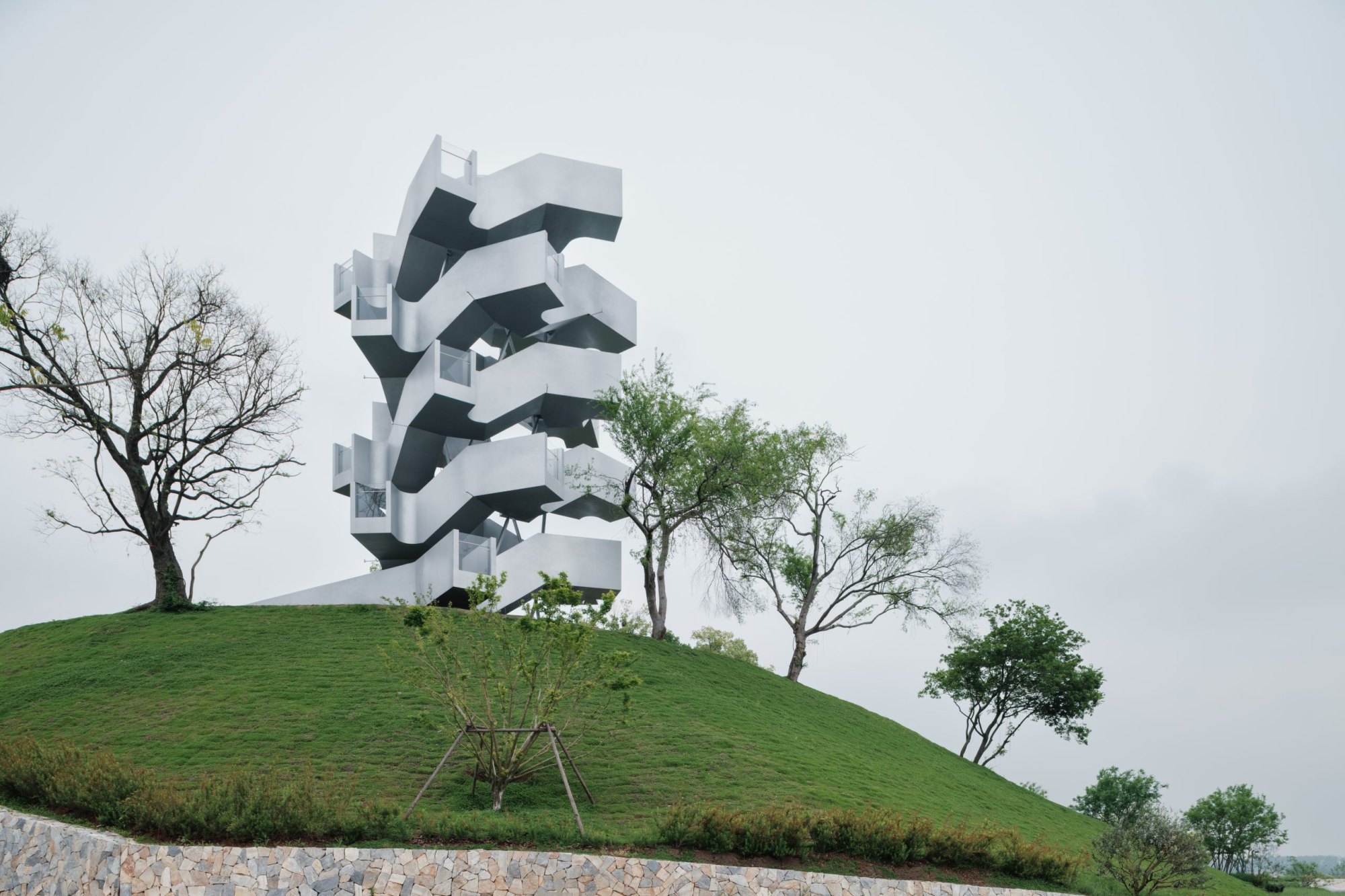
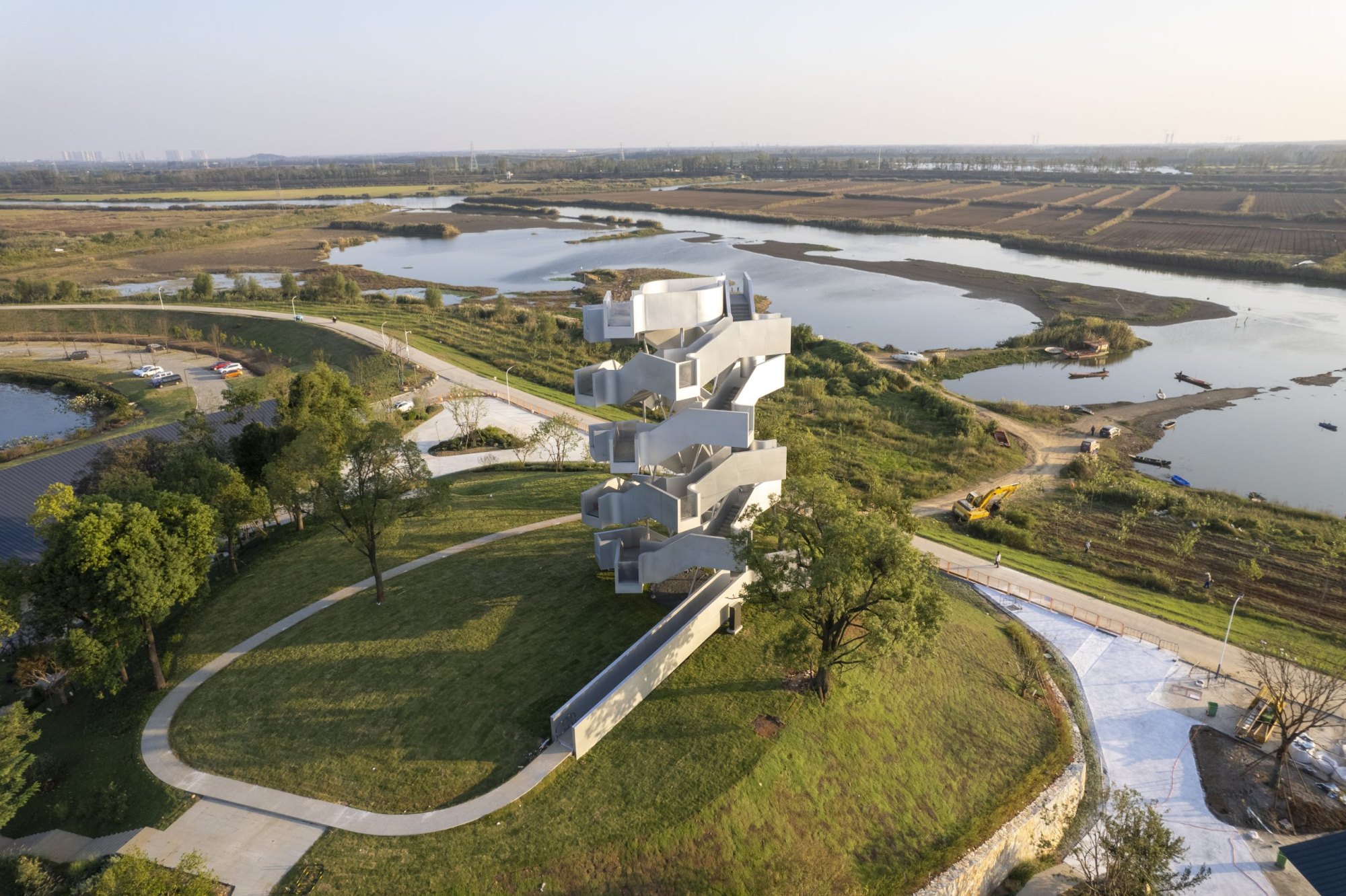
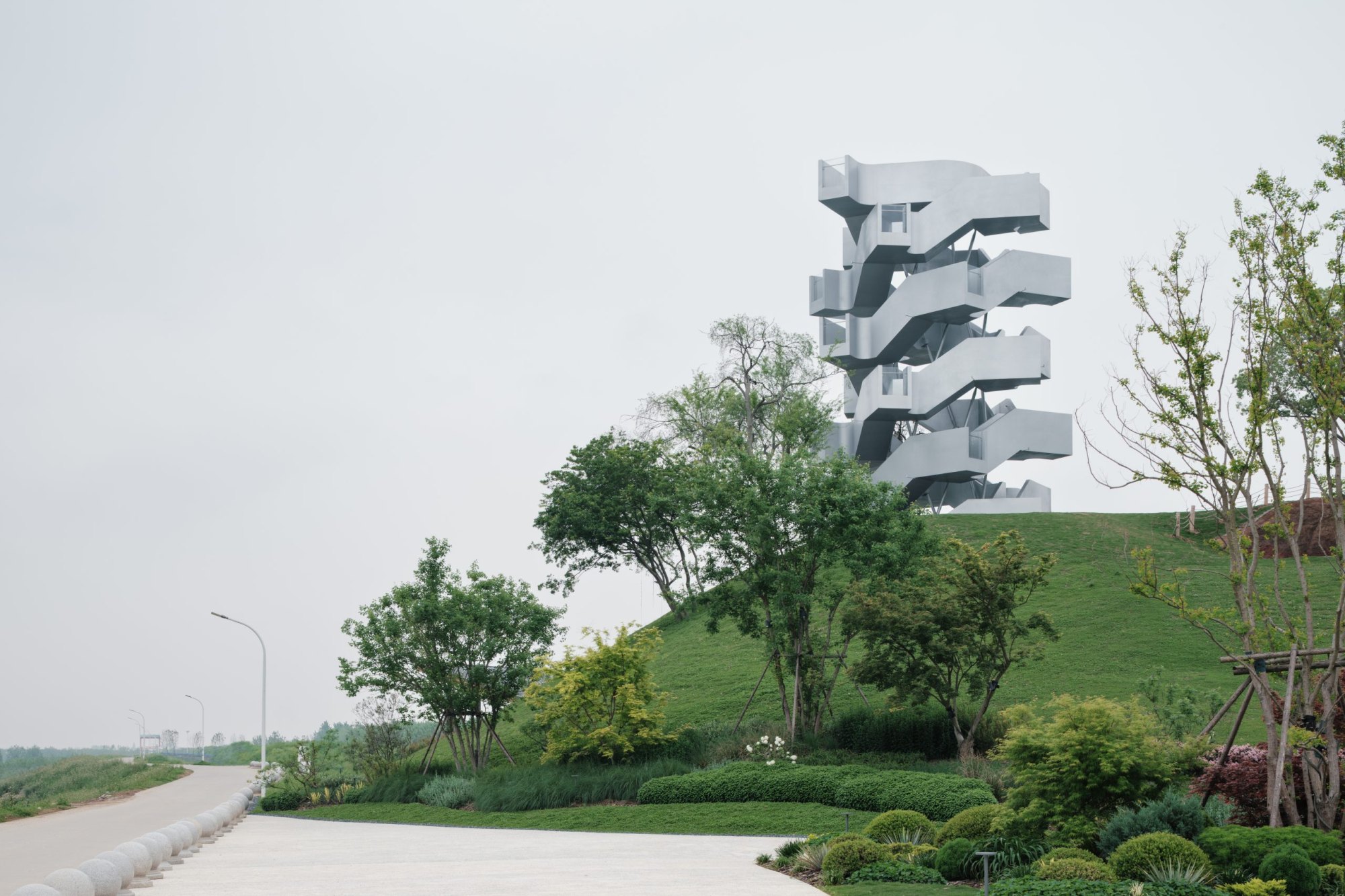
The tower stands on a natural promontory within a protected wetland. It rises 19.8 metres above a lake, a river and a wide marsh that shelters more than 100,000 migratory birds each winter.
The architects treated the climb itself as the main landscape experience, rather than a route to a viewpoint. The design slows people down, and the changing heights, pauses and turns gradually shift how they relate to the wetland.
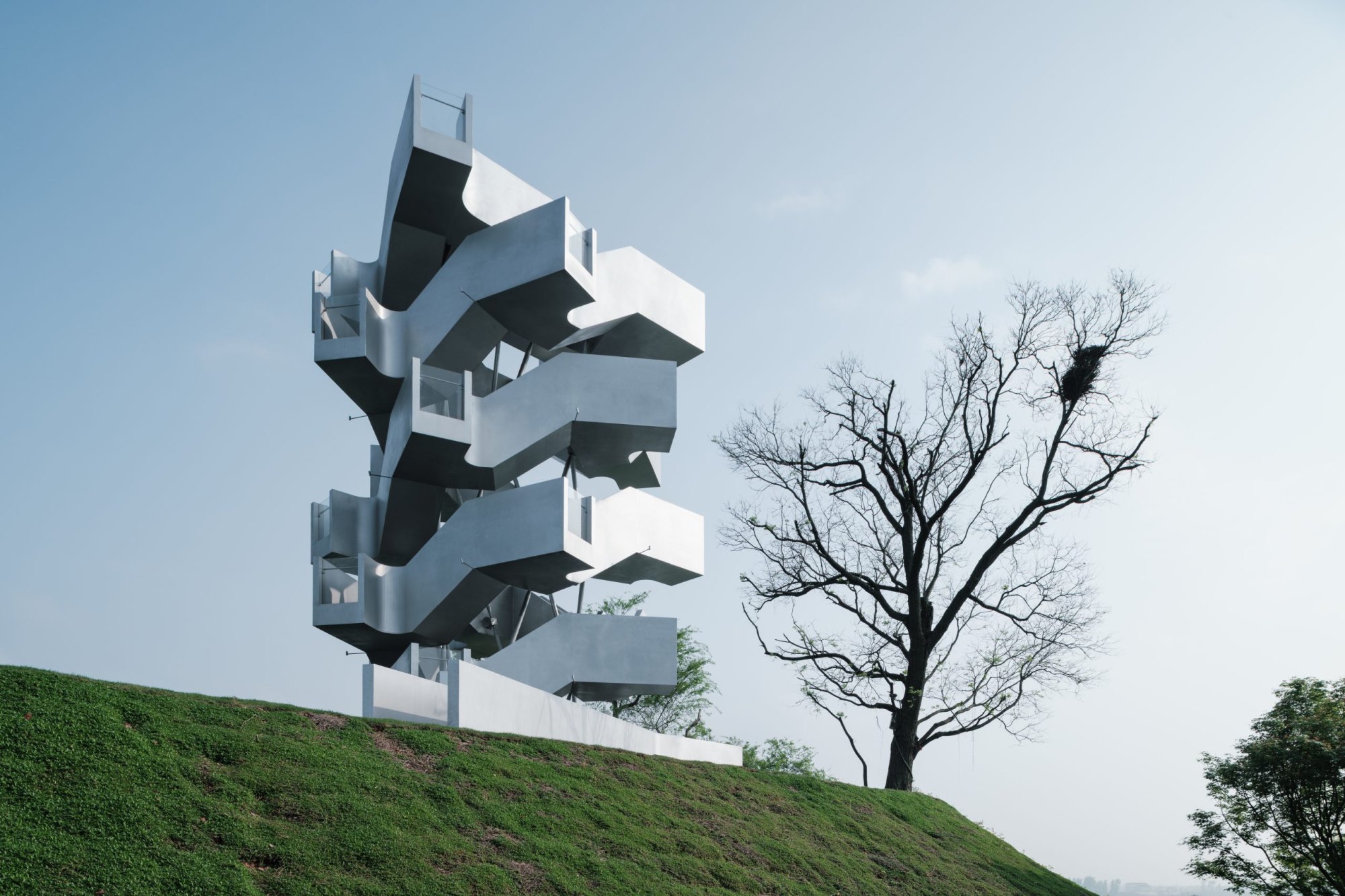
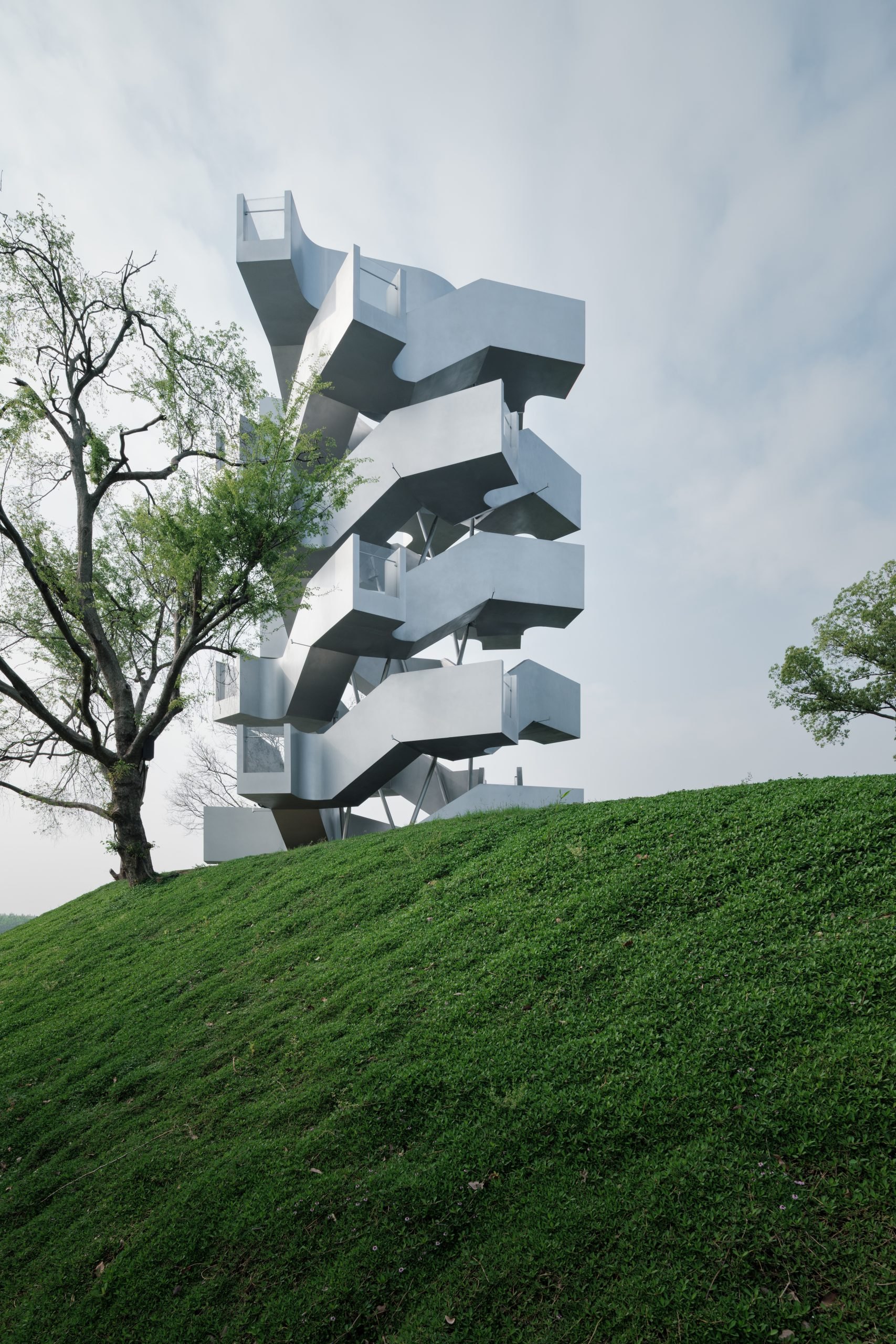
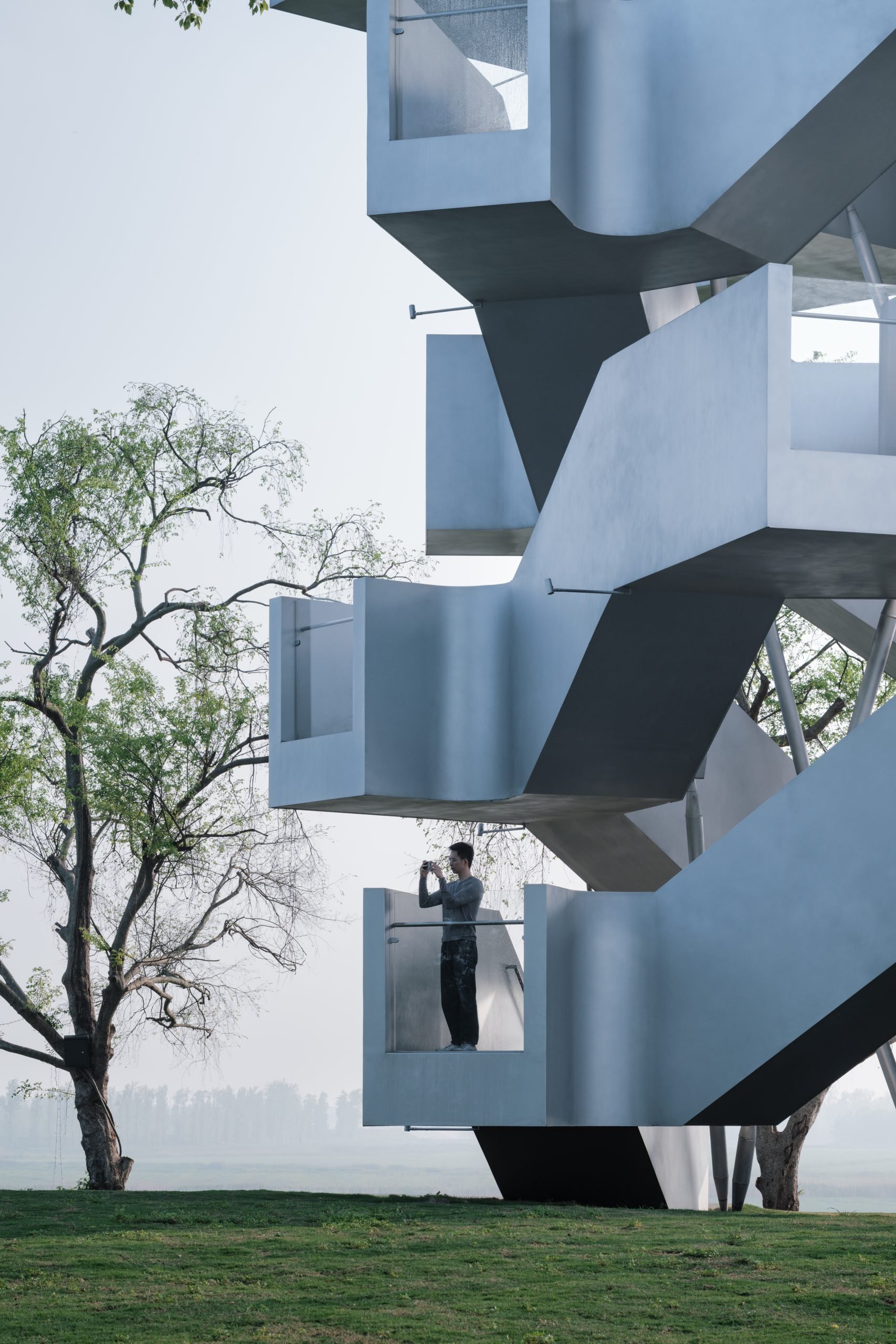
Two independent staircases coil in opposite directions to form a double helix, one for going up and one for coming down. Twenty-four staggered platforms break the climb. Close views into the tree canopy give way to long views over the marsh, so the full panorama arrives in framed pieces. The team describes three stages, ascending, turning and overlooking, and the view from the top becomes the end of a journey rather than a separate destination.
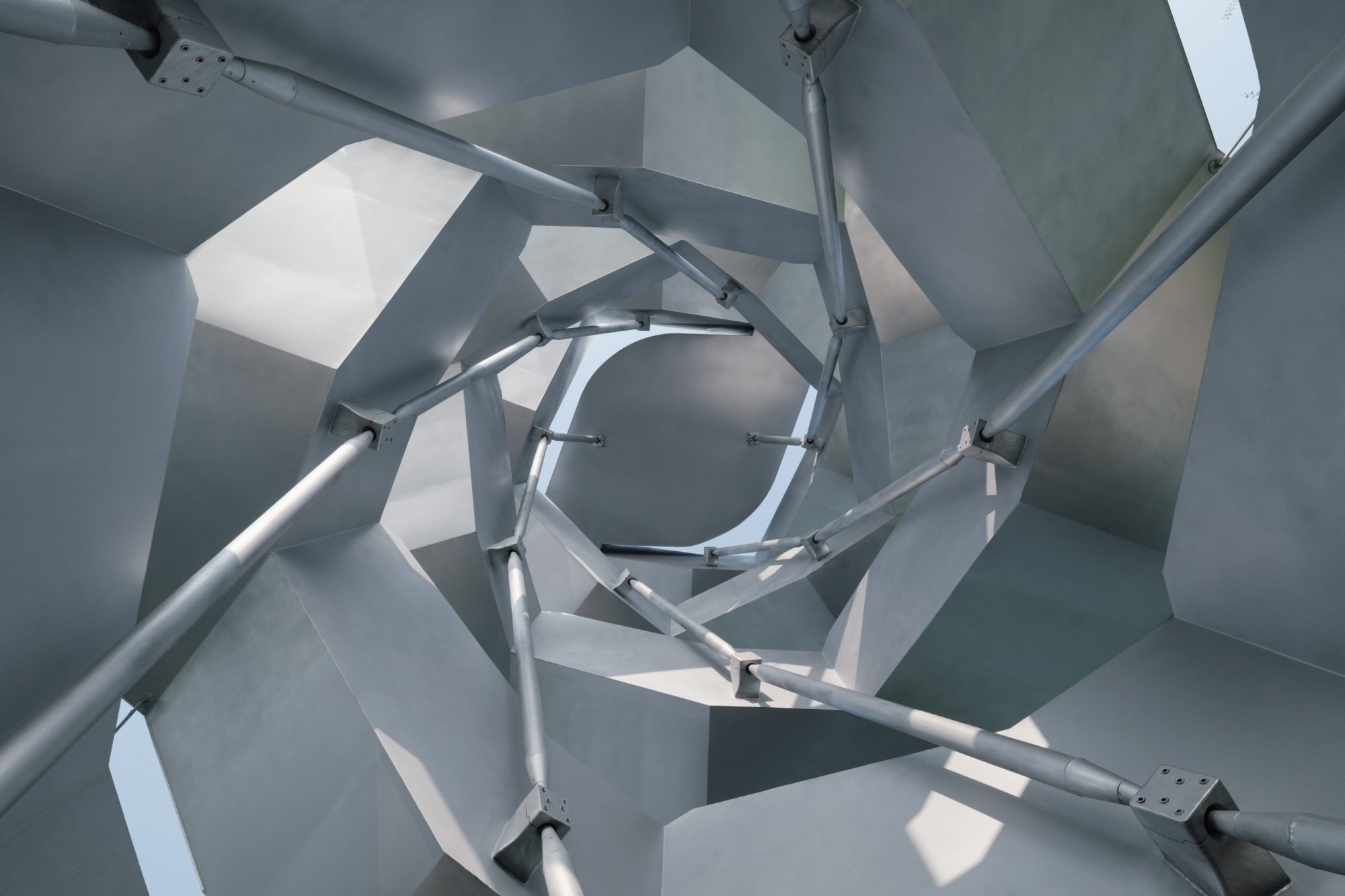
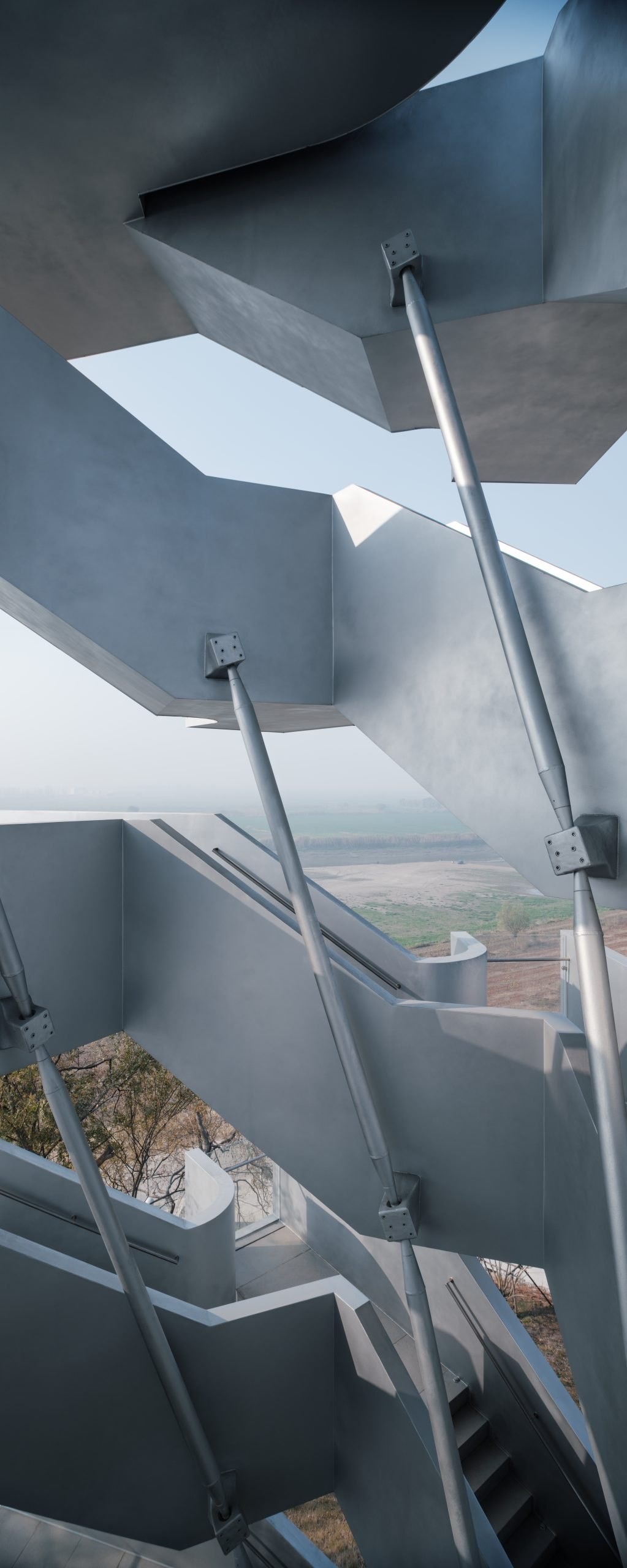
Circulation also sets the structure. There is no central core. The stairs work together with counter-rotating steel braces, whose opposing forces resist twisting and leave a three-metre void open through the middle of the tower. Parametric modelling reduced the geometry to 24 standard modules, which were prefabricated off site and assembled in place to keep work in the sensitive wetland to a minimum.
A matte silver metal skin wraps the structure and changes with the weather: muted in mist, reflecting blue on clear days, warmer at sunset. The tower does not try to disappear. It uses light and material to register the changing atmosphere, and by folding path, structure and lookout into one system it works as both an object and a route.